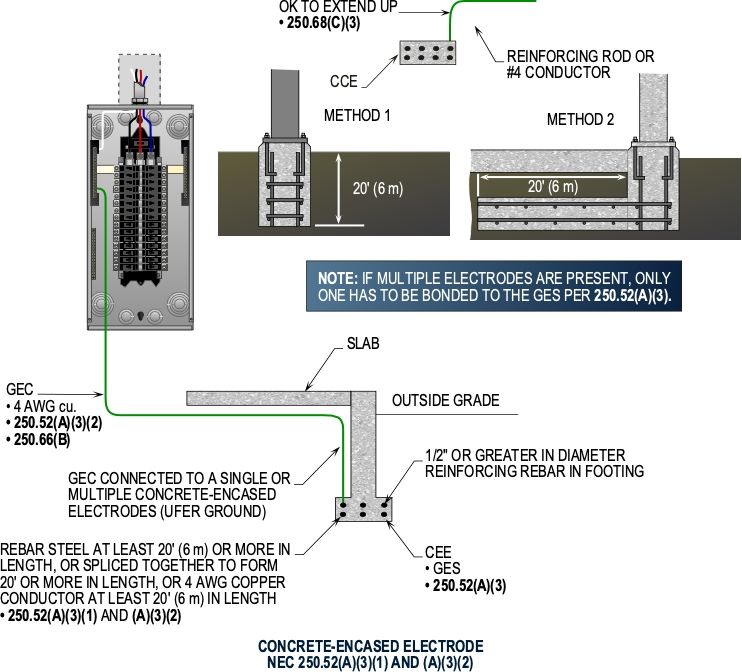
A concrete-encased electrode shall consist of at least 20 ft (6 m) of either of the following:
• One or more bare or zinc-galvanized or other electrically conductive coated steal reinforcing bars or rods shall not be less than 1/2 in. (13 mm) in diameter, installed in one continuous 20 ft (6 m) length. If one or more bare or zinc-galvanized or other electrically conductive coated steel reinforcing bars or rods are installed in multiple pieces, they shall be connected together by the usual steel tie wires, exothermic welding, welding, or other effective means to create a 20 ft (6 m) or greater length.
• Bare copper conductors shall not be smaller than 4 AWG.
At least 2 in. (50 mm) of concrete shall encase metallic components. Metallic components encased in concrete shall be located horizontally within that portion of a concrete foundation or footing that is in direct contact with the earth or within vertical foundations or structural components or members that are in direct contact with the earth. Where multiple concrete-encased electrodes are installed at a building or structure, it shall be permitted to bond only one into the grounding electrode system.